Heritage
The coffee served to the Pope
Long before it was measured on a 100-point scale, Puerto Rican coffee was measured by the company it kept. In the 1800s it was one of the most sought-after coffees in the world — poured in the palaces of European royalty and, famously, at the table of the Pope himself.
Why the mountains mattered
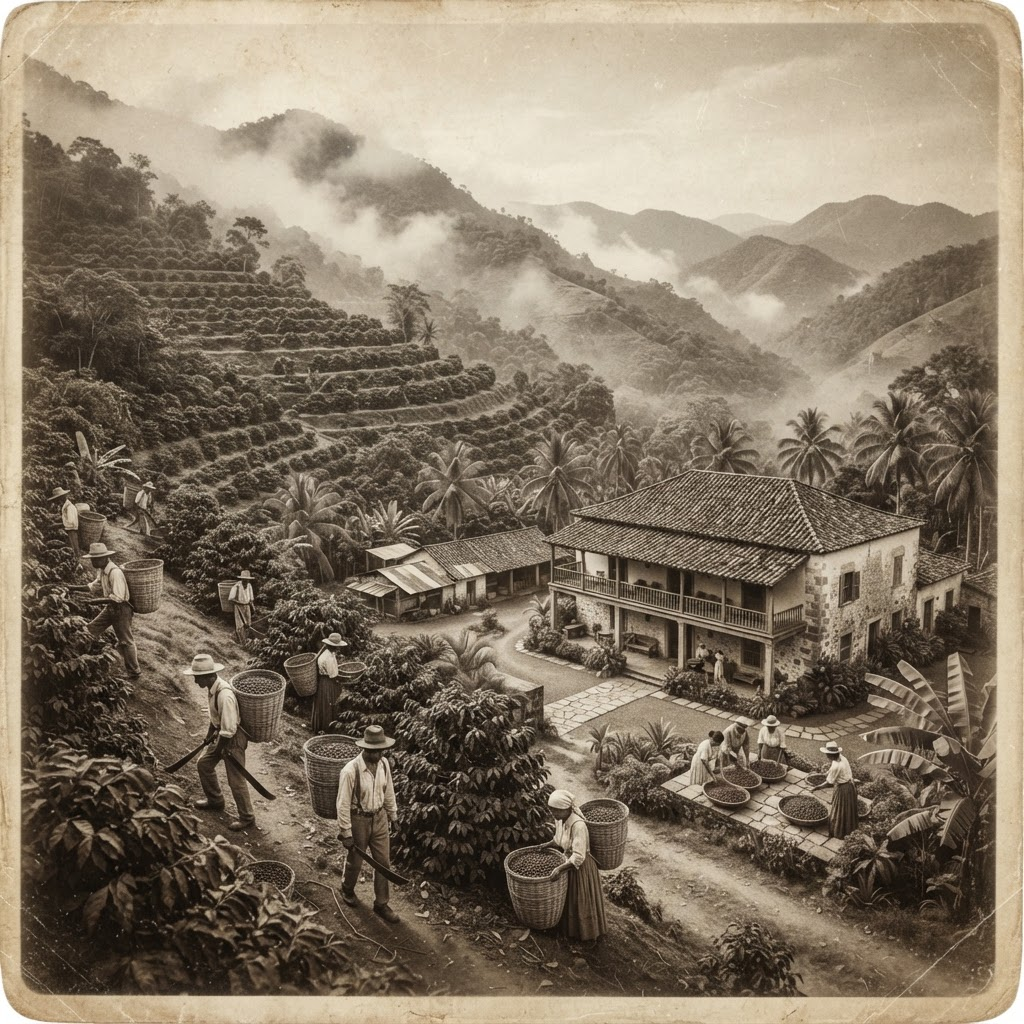
The reputation was not an accident. The high, shaded slopes of the central cordillera — around Yauco, Lares, and Adjuntas — force the coffee cherries to ripen slowly, concentrating sugars and producing a cup known for its heavy body, gentle acidity, and deep, chocolatey sweetness. That distinctive profile is what caught the attention of European buyers and, in time, the Vatican.
Yauco in particular became so celebrated that its name alone signaled quality — the origin of the “Yauco Selecto” designation still used today.
“A coffee of popes and kings”
Pope Leo XIII, who led the Catholic Church from 1878 to 1903, is widely reported to have favored coffee from Yauco — the origin of Puerto Rico’s enduring papal reputation.
A timeline of prestige
1736
Coffee arrives on the island
Coffee is introduced to Puerto Rico and quickly finds a home in the cool, misty central mountains — the high altitude, rich volcanic-influenced soils, and shade of the cordillera turn out to be ideal for dense, flavorful Arabica.
1800s
The golden age of exports
By the 19th century Puerto Rico is one of the world’s major coffee exporters. Beans from the mountain towns of Yauco, Lares, and the surrounding highlands become prized across Europe for their full body and balanced, refined cup.
Late 1800s
The coffee of popes and kings
Puerto Rican coffee earns a reputation as a coffee of royalty. Pope Leo XIII is reported to have been a devoted drinker of Yauco coffee, served at the papal table — and the beans are favored in the royal courts of Spain, Austria-Hungary, France, and beyond.
Mid-1900s
A lasting Vatican connection
The relationship endures into the 20th century, with the Vatican reported to have continued sourcing Puerto Rican coffee. The island’s beans remain a byword for prestige long after the first papal cup.
Today
A quiet renaissance
After decades of hurricanes, economic pressure, and shrinking acreage, a new generation of small farms is reviving that legacy — earning record Coffee Review scores and, in the case of Café Quinto Cielo, growing regeneratively without pesticides.
A note on the history
The “coffee of popes and kings” story is drawn from widely repeated historical accounts of Puerto Rico’s 19th-century coffee trade. Exact papal purchase records from the period are difficult to verify, so we present this as the celebrated heritage it is rather than as a laboratory-verified fact. The sources we relied on are listed on the main page.